The part that does the heavy lifting
Most people assume the opener lifts the garage door. It doesn't. The springs do. A typical two-car steel door weighs somewhere between 130 and 250 pounds, and the springs are wound to counterbalance almost all of that weight so the door feels light enough to lift with one hand. The opener just guides the door along. When a spring breaks, that counterbalance is gone, the door suddenly weighs its full weight, and the opener either strains, stops after a few inches or refuses to move it at all.
Spring failures are the single most common garage door repair we do in Waukesha, and they spike every winter. Steel springs are cycle-rated, and cold weather tends to finish off springs that are already near the end of their life.
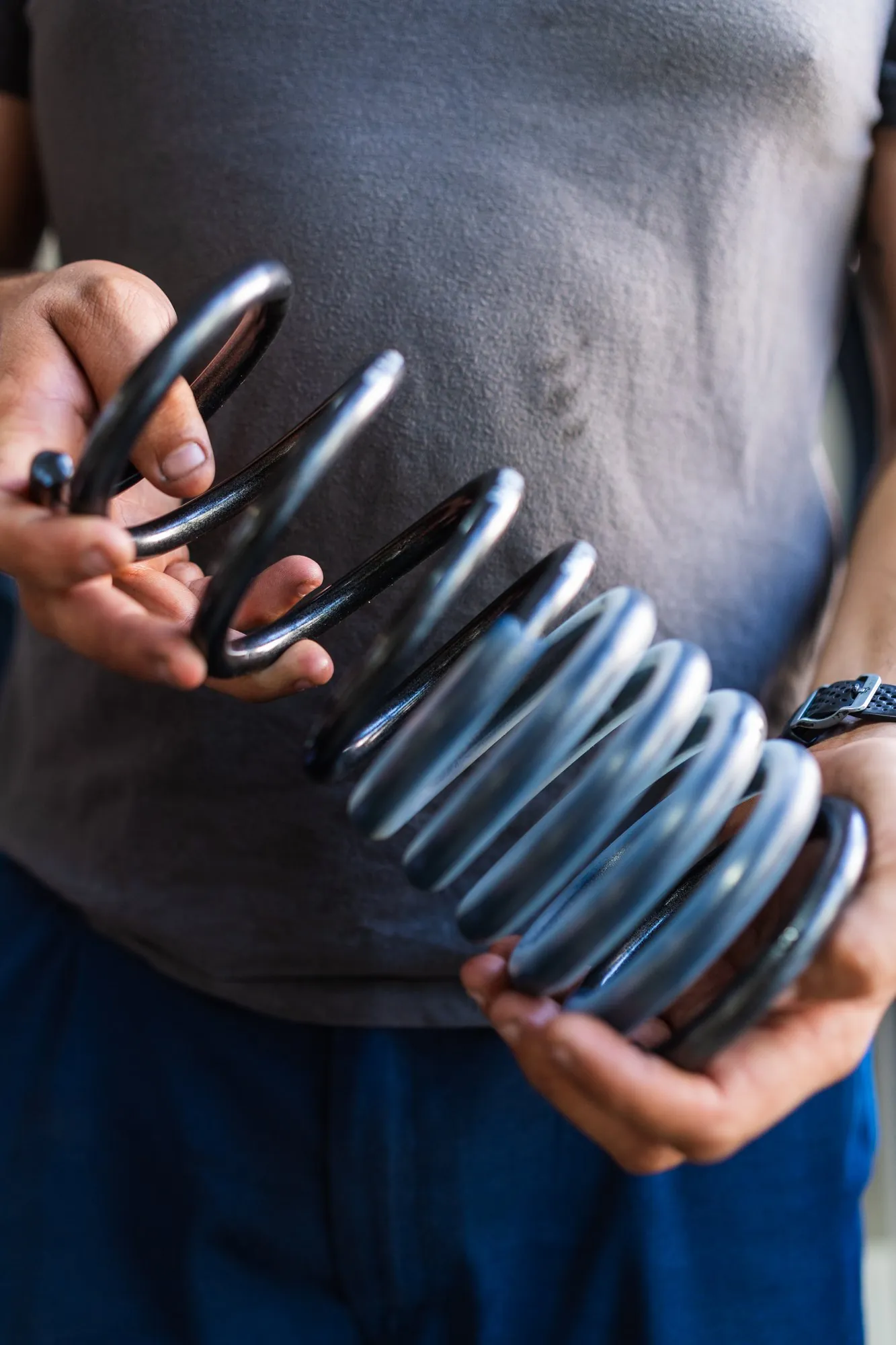
Signs your garage door spring is broken
- A loud bang from the garage, often described as a gunshot, with nobody touching the door.
- A visible gap in the torsion spring above the door, where the coil has separated.
- The door opens a few inches and stops, or the opener hums and the light blinks.
- The door is extremely heavy or drops quickly when you lift it by hand.
- Cables hanging loose or bunched beside the door after the spring lost tension.
- The door goes up crooked on extension spring systems when one side fails.
Torsion springs vs. extension springs
Waukesha homes have both types, and we replace both:
Torsion springs mount on a steel shaft above the door opening. As the door closes, the cables unwind from the drums and twist the springs, storing energy that's released to help lift the door. Most doors installed in the last 25 years, including nearly all newer homes off Les Paul Parkway and Grandview Boulevard, use torsion springs. They're smoother, safer and longer-lasting than extension springs.
Extension springs run parallel to the horizontal tracks on each side and stretch as the door closes. They're common on older homes in neighborhoods near Downtown and the Fox River and on many 1970s and '80s ranches. Each extension spring must have a safety cable running through it so that if it breaks, it can't whip across the garage. If your extension springs don't have safety cables, we'll install them.
| Feature | Torsion springs | Extension springs |
|---|---|---|
| Location | On a shaft above the door | Along each horizontal track |
| Typical lifespan | 10,000 cycles standard; 20,000+ high-cycle | About 10,000 cycles |
| Balance and smoothness | Very even lift | Can lift unevenly as springs age |
| Safety when broken | Contained on the shaft | Needs safety cables to stay contained |
| Upgrade option | Longer-life oil-tempered springs | Conversion to torsion on many doors |
How we replace a garage door spring
- Measure and weigh. We measure wire size, inside diameter, length and wind direction, and check the door's weight and height. Guessing at spring size is how doors end up heavy, fast or hard on openers.
- Unwind safely. Using proper winding bars, we release any remaining tension from the old springs and secure the door so it can't move.
- Install matched springs. On two-spring doors we replace both, since they've done the same work and the second is usually close to failing. New springs go on with new hardware where needed.
- Wind, set and balance. We wind the springs to the correct number of turns for your door height, then test balance by hand. A balanced door stays put when lifted halfway.
- Inspect the rest. Cables, drums, bearings and rollers all took a jolt when the spring broke, so we check each and point out anything worn.
- Test the opener. We reconnect the opener, adjust force and limits for the new balance, and test the auto-reverse and photo eyes.
Spring replacement is not a DIY job. A wound torsion spring stores enormous energy. Using screwdrivers instead of winding bars, loosening set screws in the wrong order, or touching a bottom bracket under tension causes serious injuries every year. Keep the door closed and call a trained technician.
Why we replace springs in pairs
If your door has two torsion springs and one breaks, the other has opened and closed the door exactly as many times. Springs fatigue at roughly the same rate, so the survivor is often days or weeks from failure. Replacing both at once means one visit instead of two, a properly balanced door and matched springs that age together. If you'd prefer to replace only the broken spring, we'll do it, but we'll always explain the trade-off first.
High-cycle springs: worth it for busy households
Builder-grade springs are typically rated for around 10,000 cycles, one open plus one close. That sounds like a lot until you do the math. A household that uses the garage as its main entrance can easily run the door five times a day, or roughly 1,800 cycles a year. At that rate, standard springs last five or six years.
High-cycle springs use heavier, longer wire to spread the stress, and they're commonly rated for 20,000 to 30,000 cycles or more. For a family that's in and out of the garage all day, the upgrade often doubles or triples spring life for a modest price difference. We'll quote both options so you can choose.
Waukesha winters and spring failures
We replace more springs between December and February than in the rest of the year combined. Cold doesn't usually break a healthy spring, but it's often the final push for one that's near the end of its cycle life. Rust adds to the problem: springs in damp, unheated garages develop surface corrosion that creates stress points where cracks begin.
A light coat of garage-door lubricant on the springs twice a year reduces friction between the coils and slows rust. During a fall tune-up, we'll check your springs for gaps, stretching and corrosion and tell you how much life they likely have left, so you can replace them on your schedule rather than on the coldest morning of the year.
What to do right now if a spring broke
- Leave the door closed if it's closed. Don't run the opener again.
- If the door is open, don't try to close it or pull the emergency release; keep everyone out from under it.
- Unplug the opener if it keeps trying to run.
- Call us. Broken springs are a priority, and we carry common sizes on every truck.
What affects the price of spring replacement
Every quote is written out before work starts, and the main factors are easy to understand:
- Spring type: torsion or extension, and whether your door uses one spring or two.
- Spring size: heavier and taller doors need larger wire and longer springs.
- Cycle rating: standard springs cost less up front; high-cycle springs cost a bit more but last much longer.
- Related parts: worn cables, drums or bearings found during the inspection, which you can approve or decline.
Spring myths we hear in Waukesha
"I can just add a turn to make the door lighter." Adding turns to a worn spring can briefly make the door feel lighter, but it overstresses the steel and often leads to an earlier break. Springs should be sized correctly, not over-wound.
"Any spring that fits the shaft will work." Springs that look similar can differ in wire size by fractions of an inch, and that changes how much weight they lift. A mismatched spring leaves the door unbalanced and hard on the opener.
"The opener will still lift it." Openers aren't built to lift a door's full weight. Doing so strips gears and strains the motor, and the door can fall if anything gives way.
After your new springs are installed
New springs change how the door feels. It should lift smoothly by hand, stay in place when stopped halfway and run more quietly on the opener. Over the first few weeks, springs can settle slightly; if the door starts to drift up or down when left halfway open, give us a call and we'll fine-tune the tension. Lubricate the springs lightly twice a year and test balance every few months to get the most from them.
Frequently asked questions
How long do garage door springs last?
Standard springs are usually rated for about 10,000 cycles, which works out to roughly 5 to 7 years for a typical Waukesha household. High-cycle springs can last two to three times longer.
Can I still use my door with one broken spring?
No. Even on a two-spring door, one broken spring leaves the door badly out of balance. Running it can strip the opener, bend the door and snap the cables. Keep it closed until it's repaired.
Why did my spring break in the winter?
Cold doesn't break healthy springs, but it often finishes off springs that are worn, rusted or near the end of their cycle rating. That's why spring calls spike in Waukesha every December through February.
Do you carry springs on your trucks?
Yes. Our trucks carry torsion and extension springs in the sizes most common on Waukesha doors, so most spring replacements are completed on the first visit.
Can you convert extension springs to torsion springs?
On many doors, yes. A torsion conversion gives smoother, more balanced lift and keeps springs contained on a shaft. We'll check your headroom and track setup and let you know if it's a good fit.
How long does spring replacement take?
Most torsion spring replacements take about an hour, including measuring, unwinding, installing, winding and balancing the door and testing the opener. Extension spring jobs are similar.