What garage door cables do
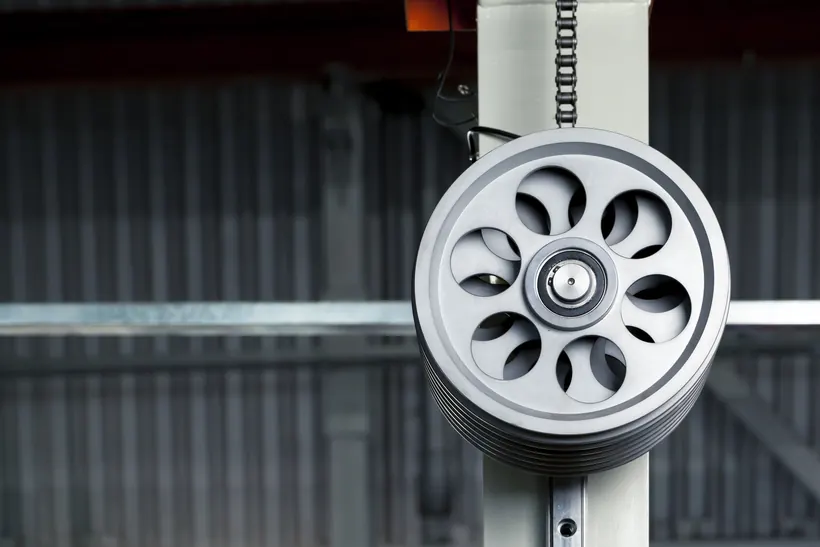
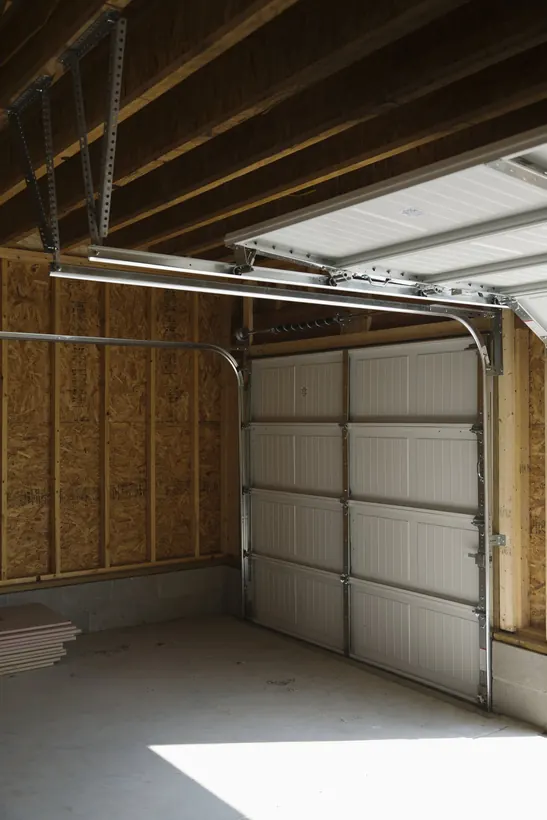
Your springs store the energy that lifts the door, but the cables deliver it. On a torsion system, a steel lift cable runs from each bottom corner of the door up to a grooved drum on the spring shaft. As the springs unwind, the drums turn and wind the cables, pulling the door up evenly on both sides. On an extension spring system, cables run through pulleys and attach to the springs along the tracks.
Because the cables carry nearly the full weight of the door on every cycle, they wear. When one frays, stretches, slips off its drum or snaps, the door loses support on that side. That's when you see a door hanging at an angle, one corner dragging on the floor while the other is several inches up, or rollers popping out of the track.
Signs of a cable problem
- Door closes crooked, with a gap under one side.
- Visible fraying or broken strands near the bottom brackets.
- A cable hanging loose or bunched near the drum above the door.
- Door jerks or shudders as it starts to open or close.
- Rollers jumping the track on one side as the door moves.
- Rust and corrosion on the cable ends at the bottom of the door.
Why cables fail in Waukesha garages
Road salt is the biggest enemy of garage door cables here. All winter long, cars bring salty slush into the garage. It melts on the slab, splashes onto the bottom section, and wicks into the cable where it loops around the bottom bracket. Salt water gets between the strands and corrodes them from the inside, so a cable can look reasonably good on the outside while the core is badly weakened. We find more frayed cables in February and March than at any other time of year.
Other common causes include a broken spring (when the spring lets go, the sudden slack can jump a cable off its drum), worn or misaligned drums, a bent track that makes the door bind and lets the cable go slack, and simple age. Cables on a door that's been running since the house was built off Sunset Drive or Northview Road in the 1990s have worked through many thousands of cycles.
How we repair garage door cables
- Secure the door. A door with a failed cable is unbalanced and can shift. We clamp it in place before touching anything.
- Release spring tension. On torsion systems, the springs must be unwound before cables can be replaced safely. This is the most dangerous part of the job and is done with proper winding bars.
- Replace both cables. Like springs, cables wear as a pair. We install new galvanized cables of the correct diameter and length for your door height.
- Inspect drums and bottom brackets. Worn drum grooves or rusted brackets will chew up new cables, so we check and replace them as needed.
- Re-level the door. Equal cable tension on both drums is what makes a door close flat. We adjust until the bottom seal meets the floor evenly side to side.
- Rewind and balance. Springs are rewound to the correct tension, balance is tested by hand, and the opener and safety systems are checked.
The bottom brackets are under full spring tension. The bolts that hold the cable at the bottom of the door can release with violent force if loosened while the springs are wound. Please don't attempt to re-thread or replace a cable yourself.
Cable off the drum: repair, not just re-threading
Sometimes a cable isn't broken; it's just slipped off the drum. It's tempting to think the fix is simply putting it back. But cables don't usually jump off for no reason. Common culprits include a door that hit an obstruction while closing, a bent or loose track, a worn drum, a spring that's lost tension, or an opener pushing the door down too hard. If we only re-thread the cable, the same thing will happen again. We find and correct the cause, then reinstall or replace the cable.
Prevent cable trouble
A little attention goes a long way, especially through a Waukesha winter:
- Rinse or wipe salty slush off the bottom section and brackets periodically between November and March.
- Look at the cables near the bottom corners a few times a year. Any broken strands, kinks or rust mean it's time to call.
- Keep the bottom of the door clear. Hitting a snow pile, recycling bin or bike while closing can slacken a cable.
- Make sure the opener's force setting isn't too high; a door that pushes hard into an obstruction stresses cables.
- Schedule a tune-up when you replace springs. New springs on old, frayed cables is a short-lived repair.
Cables, springs and drums work as a team
Because these parts are so connected, we often recommend replacing worn cables when springs are replaced, and checking drums whenever cables fail. That's not upselling; it's the difference between a door that runs smoothly for years and one that brings us back in a few months. Every recommendation comes with a clear explanation and a written price, and you choose what to do.
Safety cables on extension spring doors
If your door uses extension springs, the springs should have safety containment cables running through their centers. These are separate from the lift cables. If an extension spring breaks without a safety cable, pieces of spring and hardware can fly across the garage with enough force to break windows or injure someone. Many older doors in Waukesha were installed without them or have had them removed. We'll check, and if they're missing, we install them as part of any cable or spring repair.
Fast cable repair across Waukesha
A door hanging crooked usually can't be closed securely, so we treat cable failures as same day priorities. Our trucks carry lift cables in standard lengths along with drums, bottom brackets and safety cables, which means most cable repairs are finished in one visit. We serve every Waukesha neighborhood in ZIP codes 53186, 53188 and 53189 and nearby Pewaukee, Brookfield, New Berlin, Genesee and Big Bend.
What we check alongside the cables
A cable rarely fails on its own, so a proper repair includes a look at the parts around it:
- Bottom brackets: rusted or bent brackets can cut new cables. We replace them when needed.
- Drums: grooves should be clean and smooth, and both drums must match.
- Springs: a worn spring lets cables go slack; we check balance after every cable repair.
- Tracks and rollers: a door that binds or rubs on one side can throw a cable off its drum.
- Opener settings: too much down force can slacken cables when the door meets the floor.
What affects the price of cable repair
Cable replacement is usually straightforward. The cost depends mainly on whether one or both cables need replacing (we usually recommend both), whether the drums or bottom brackets are damaged, the height and type of the door, and whether a spring also needs replacing. If the door came off its track when the cable failed, track and roller repairs may be needed as well. You'll get a written price for each item before we begin.
Cable sizes and why they matter
Garage door cables aren't one-size-fits-all. They're sized by diameter and length to match the door's weight and height. A standard 7-foot residential door commonly uses 1/8-inch cable, while heavier and taller doors may need thicker cable rated for higher loads. Using cable that's too light, or the wrong length for the drum, leads to fraying, slipping and uneven lifting. We match the cable to your door's spring system, height and weight so it winds correctly and lasts.
Frequently asked questions
Can I fix a garage door cable myself?
We strongly advise against it. Cable work requires releasing spring tension, and the bottom brackets are under full spring load. Injuries from DIY cable repairs are common. It's a job for a technician with the right tools.
Why does my garage door close crooked?
The most common cause is a loose, slipped or broken lift cable on one side. A worn drum, a bent track or an unevenly wound spring can also cause it. We'll find the cause and re-level the door.
Should both cables be replaced at once?
Usually, yes. Both cables carry the same load and have the same wear. Replacing them together ensures even tension and a level door.
How long does cable replacement take?
Most cable replacements, including re-leveling and balancing, take about an hour to an hour and a half, depending on the door and whether drums or brackets also need work.
Is a frayed cable an emergency?
A frayed cable can snap without warning, leaving the door crooked or stuck. If you see broken strands, avoid using the door if possible and call us to schedule a repair soon.
Can a door with a broken cable still close?
Sometimes, but it may close crooked or bind in the track, and it can drop unevenly. It's safest to leave the door where it is and have a technician secure and repair it.